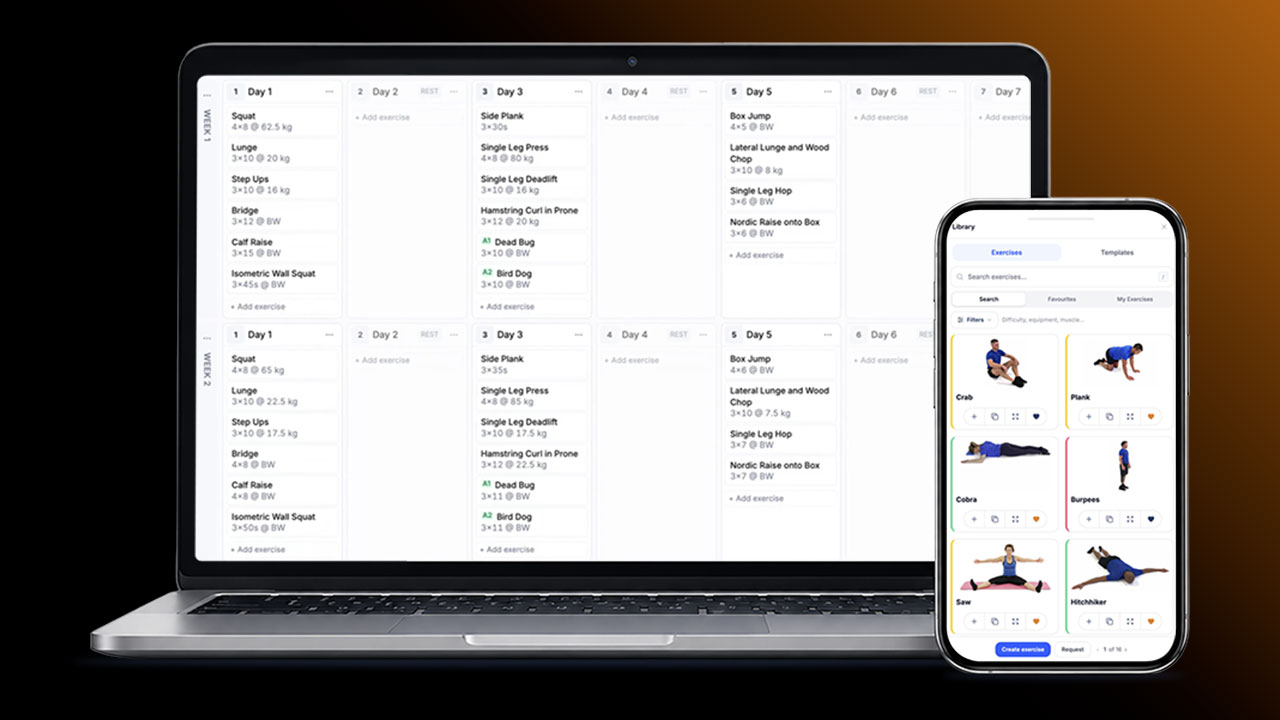
Your patients deserve more than three exercises in a list and a "see you in two weeks". In our latest webinar, the Rehab Guru team showed how structured programming lets you plan rehab week by week, progress it automatically and track it remotely, all without leaving the platform you already use for appointments, notes and billing.
The session was hosted by Simon, co-founder of Rehab Guru and a former exercise rehabilitation instructor in the Royal Air Force who now builds the platform day to day; David, a physiotherapist who leads the commercial and customer success side; and Cloudia, a physio who looks after customer success and support from South Africa. Here is what they covered, and how you can put it to work in your clinic this week.
Planning in weeks gives patients clarity, gives your clinic better control of time and resources, and opens up new ways to keep patients for longer. David broke the case down into three parts.
Most clinicians will recognise the question: "Which days should I do these, and do I do them every day?" Unless you have a background in professional sport, the military or strength and conditioning, our reasoning can have holes in it and our results sub-optimal.
The popular advice is to keep it simple and send patients away with two or three exercises. The trouble is that this rarely gets to the heart of the problem. Often the patient is deconditioned and not yet fit for what they want to do, whether that is picking up their children, gardening, or catching themselves when they stumble.
"It's not just about what exercises will get you out of pain. It's about health promotion. It's about injury prevention and making sure that person is fit to carry on doing all the things that they love." David
A weekly plan also builds in the part of any programme that is easiest to forget: rest. Too much rest and patients decondition; too little and they overload. When a patient opens the app and sees "Today is Monday, you have two exercises", or "Today is a rest day", the guesswork disappears. Variety across the week keeps them engaged too, rather than repeating the same two exercises every day for a fortnight.
A well-planned programme means rehab does not have to take over every appointment. You can decide when patients need to be seen, schedule time on shared kit such as shockwave, and use your finite space and staff more effectively.
Patients are increasingly turning to apps and personal trainers to manage their health after discharge. David's view is that clinicians, who are trained for this, are the best people to do it, and patients already trust you because you got them out of pain.
Structured programmes make it practical to extend the care pathway into prehab, maintenance and remote monitoring, including subscription-style services, rather than discharging at six weeks and looking for the next patient.
Cloudia made an important point: advanced programming is not just for elite athletes or high-level rehab. It is about having the flexibility to build a bespoke programme for whoever is in front of you. As Simon put it, replace "advanced" with "structured" in your mind.
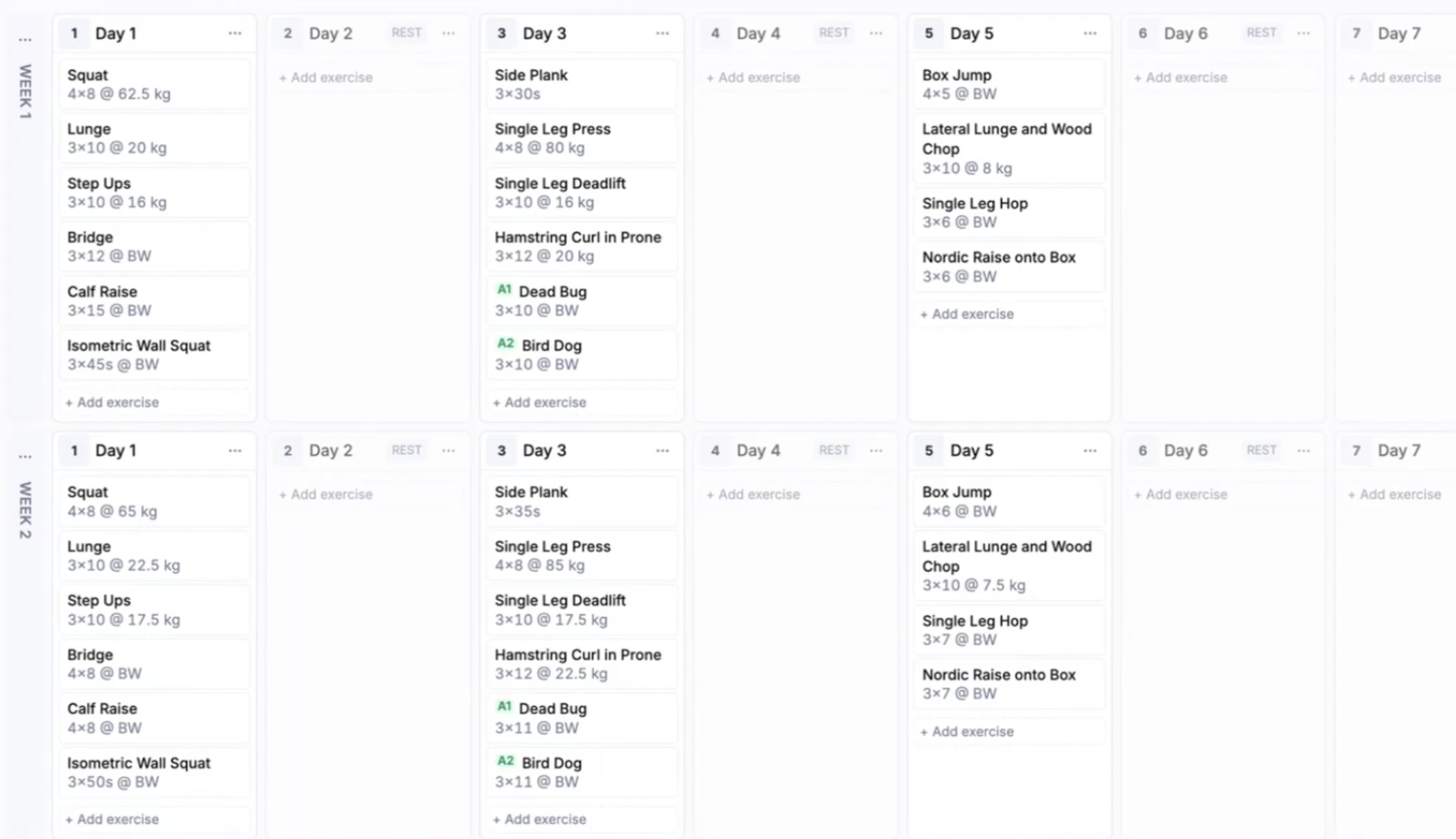
With David directing as the clinician and Simon at the keyboard, the team built a programme for a patient a few days after ACL reconstruction.
Rehab Guru includes ready-made ACL reconstruction templates, organised by milestone rather than by date, so patients move on when they hit each stage. Search "ACL" in templates, then add or load them into your programme. Any templates you have built yourself work here too: legacy simple-list templates load into day one, and you can drag or copy them into the right days.
The demo programme used three exercise days with 48 hours between sessions and a two-day weekend break. Use the three-dot menu to mark rest days, and patients will see "Today's a rest day" in their app.
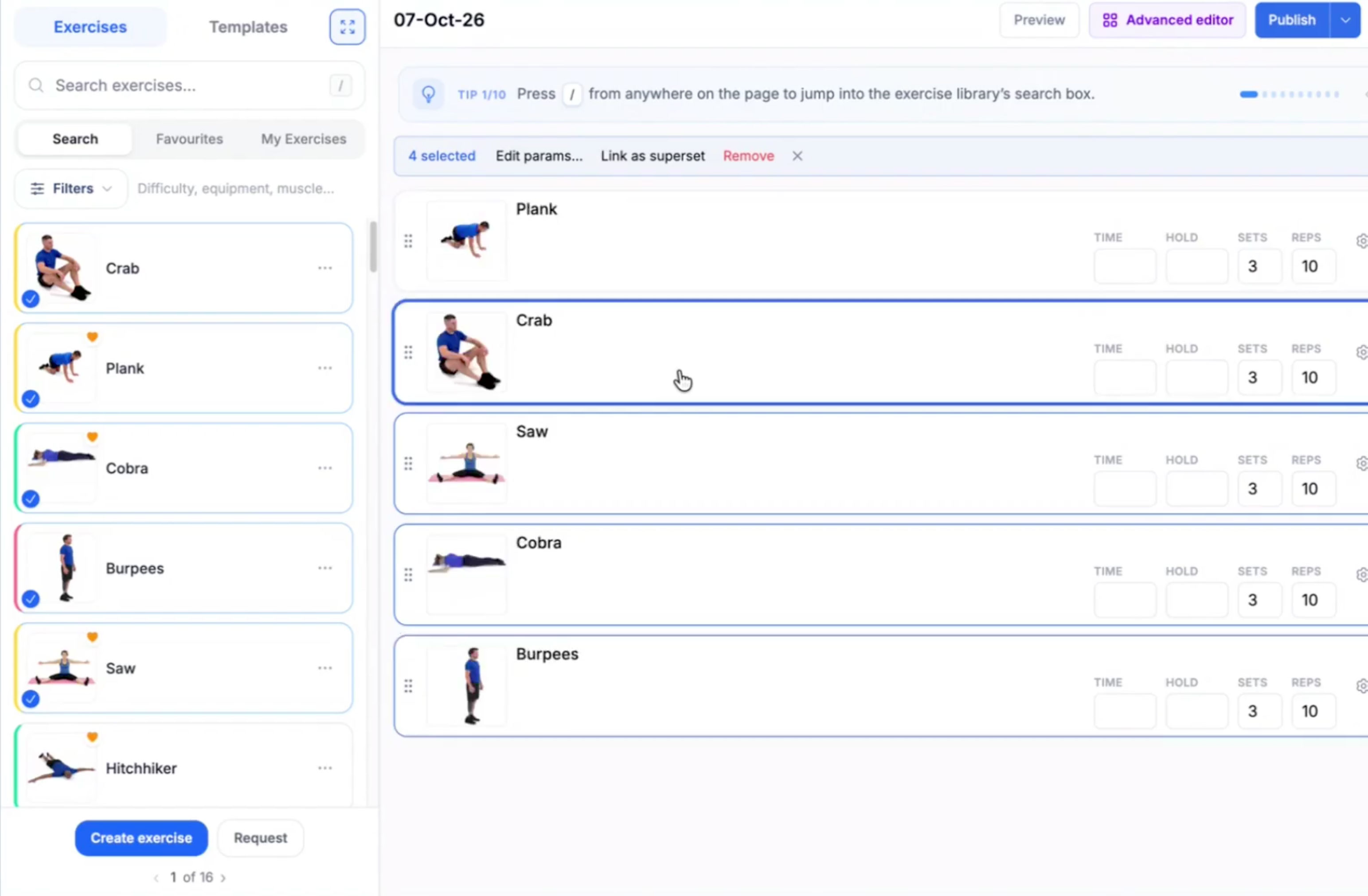
The new creator sits on a single page and is designed around the keyboard to cut down on clicking and tab-switching. Simon's favourites:
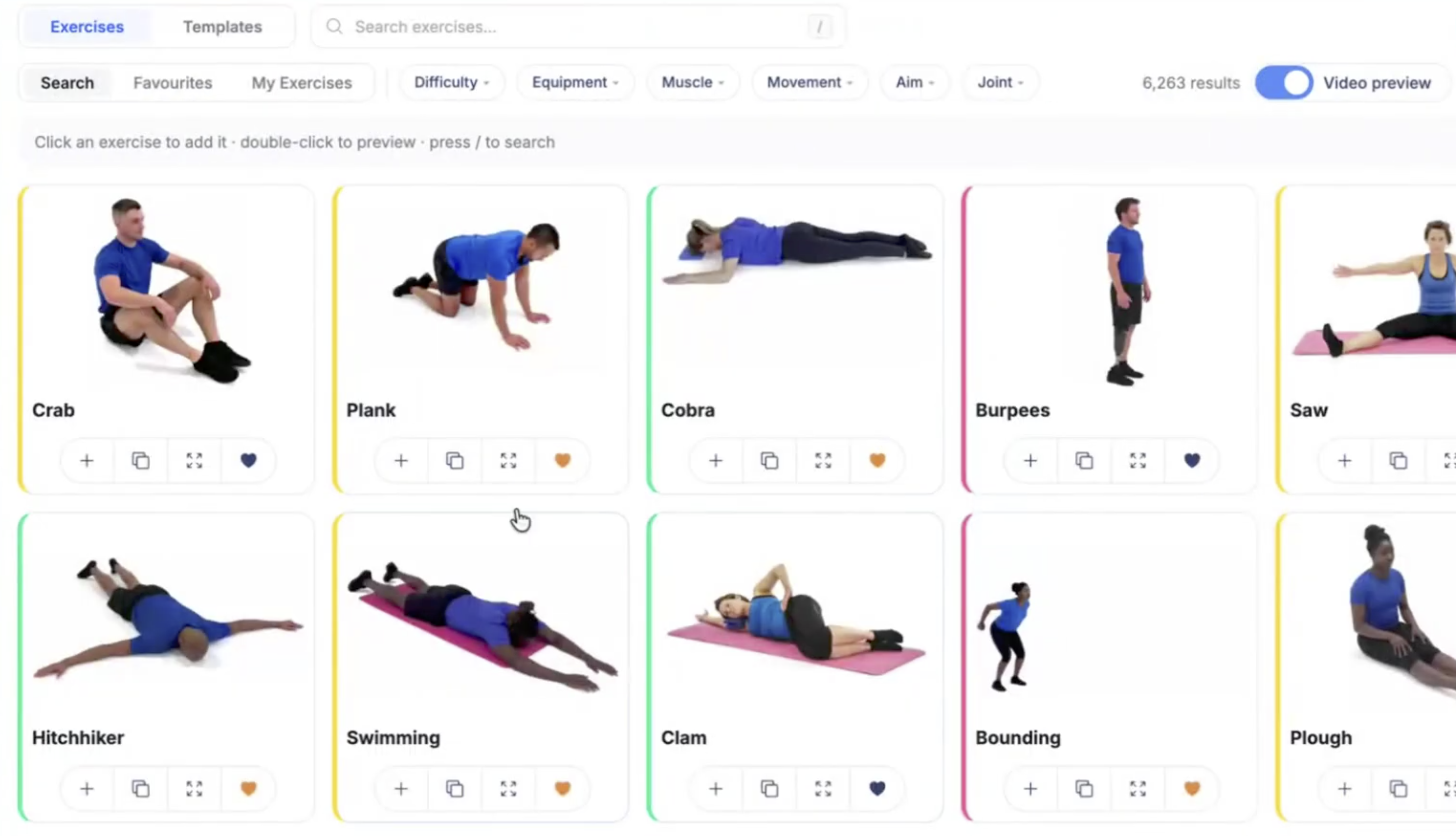
The library itself has over 6,000 exercises, with infinite scroll, adjustable card sizes, full-screen view and videos that play on hover.
"It is really well worth just spending 15 minutes learning those and practising those. It will pay dividends in time." Simon.
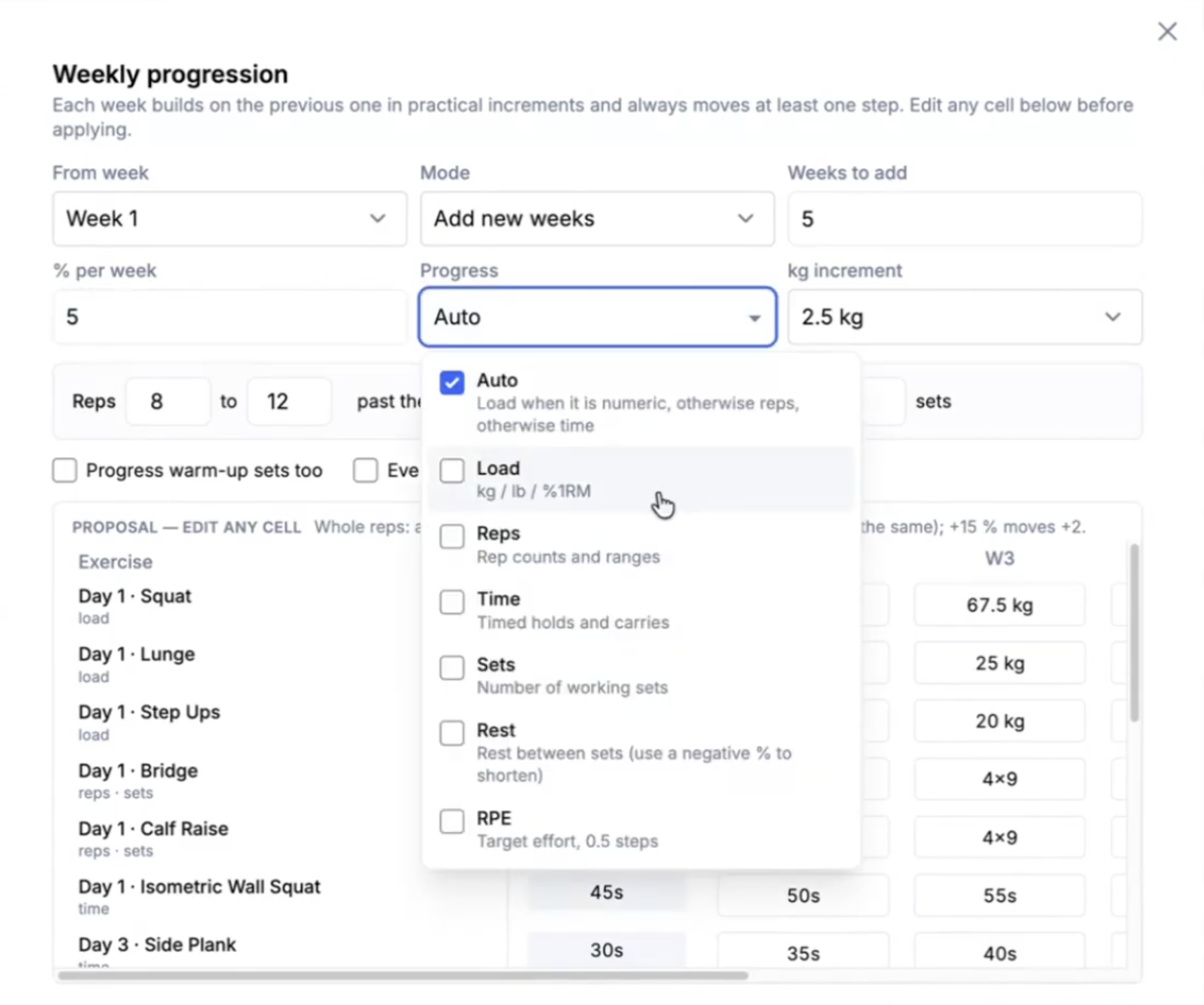
Once week one is built, the progression tool writes the rest of the programme for you. In the demo, a single click turned one week into a six-week progressive plan.
There are options for even reps only and for progressing warm-up sets too.
Progression is not only upwards. A deload week keeps the movement patterns going while reducing load, reps, sets or time under tension, or adding rest between sets. To add one, progress from week three, add one week with a progression of minus 5%, then mark it as a deload. The result is a three-week build followed by a lighter week.
Pair this with symptom tracking, where patients rate sleep, wellness and fatigue to give a readiness score, and you can drop in a deload whenever their data suggests they need it.
The team shared the tools they use most with their own patients.
On the patient portal and mobile app, patients work through each day with their reps and sets laid out, tick exercises off as they go, and get an automatic rest timer, with the option to add 15 seconds if they need it. Supersets appear as rounds, and rest days are clearly labelled.
Cloudia asked the question many clinicians have: do you still need to issue a new prescription every time you progress a programme? Not any more.
When you send a programme, toggle Update existing prescription and choose the one to progress. Rehab Guru creates a new version rather than overwriting the old one, so you keep a robust audit trail of every clinical prescription. Superseded versions stay viewable in the patient record exactly as sent.
Patients automatically see the latest version next time they open the app, and receive a courtesy email (which you can customise) letting them know their programme has been updated.
Every programme has its own unique ID, so it does not matter who logs a session or on which device. If you see a patient in person for strength and conditioning, open their programme from their record and log the session for them. The data lands in the same place as if they had logged it themselves.
To keep track of your wider caseload, filter your client list and analytics by compliance and reported outcome measures, such as Borg score and breathlessness, to see who needs a follow-up. Objective data from connected devices, including Strength by Numbers, sits under physical tests with charting built in.
"They'll feel like they're getting the white glove treatment, but it's actually minimal burden for you." Simon
Clinicians and patients want something better than rehab exercises in a list. Strength and conditioning platforms such as TrueCoach, TeamBuildr and TrainHeroic offer good programming tools, but they are often light on rehab exercises and are not built around clinical data protection.
For clinics that must be GDPR compliant, it matters where special category health data is stored, that it stays in the UK and that it is not used to train AI. As David put it, if rehab software does not provide the features clinicians want, they will turn to tools that leave them non-compliant.
"We've been wanting to build this for five or ten years. We just appreciate everyone's patience and for sticking with us." David
Every feature in this update came from customer feedback, and we want to keep it that way.
Ready to try it? Open the creator, load an ACL template, press ? to learn the shortcuts, and build your first structured programme today.
Watch the full webinar replay on our YouTubeChannel here