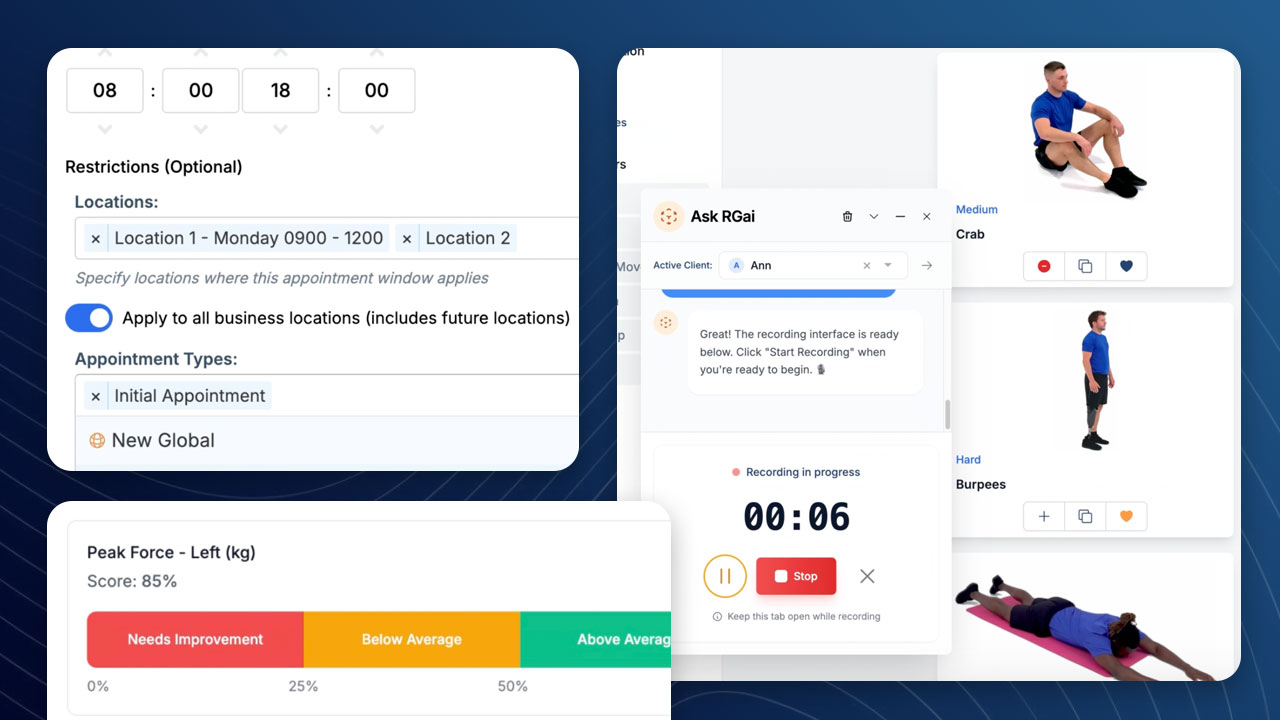
We are delighted to introduce a powerful set of new features designed to make your clinical workflow smoother, your communication clearer and your use of data more meaningful. This release brings significant improvements across booking availability, notification visibility, clinical documentation, correspondence and objective performance testing.
These updates are available now, and each one has been shaped by feedback from clinicians using Rehab Guru every day.
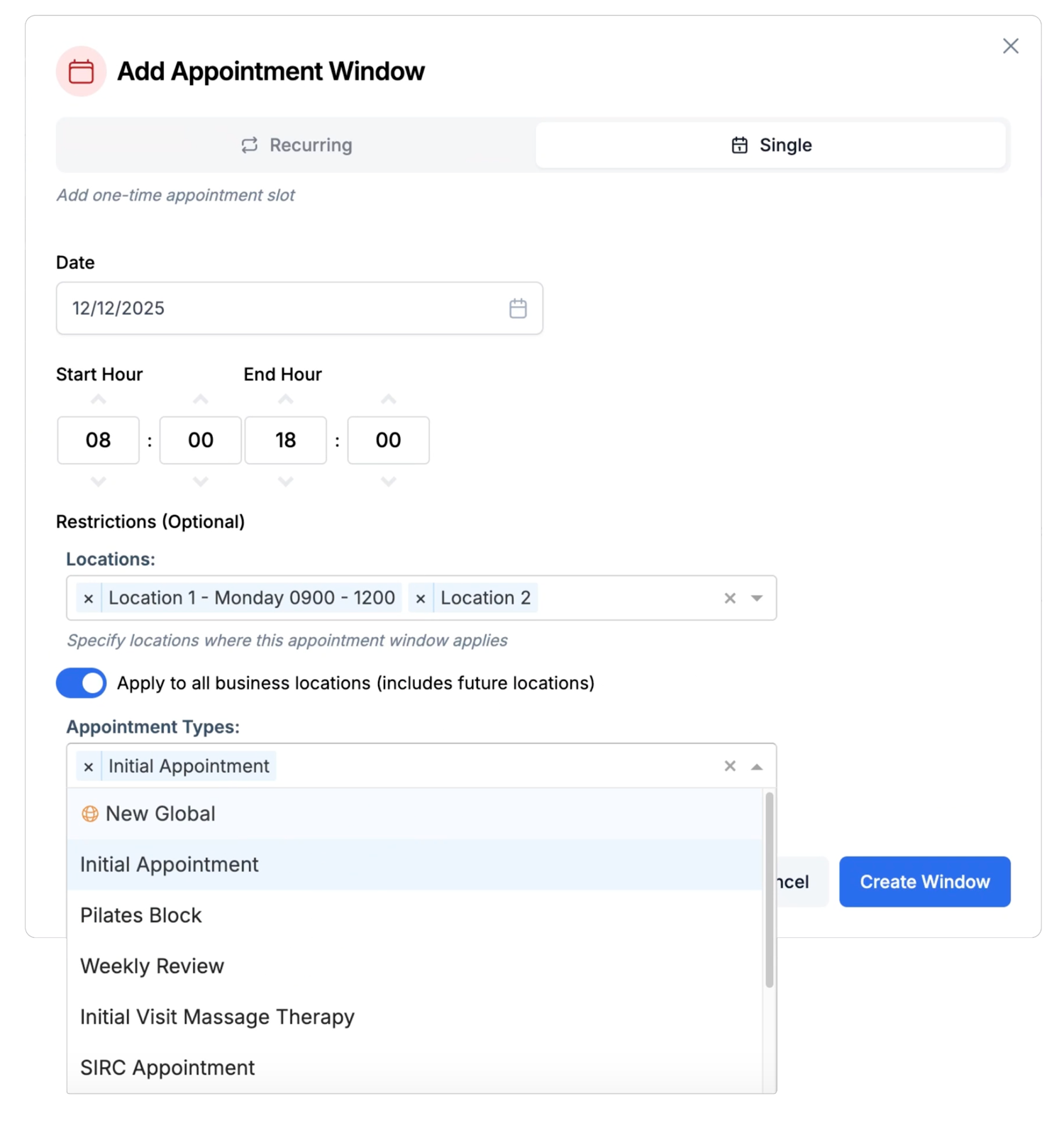
Your diary now offers far greater flexibility. You can create ad hoc appointment rules that define exactly when you wish to be available, without disrupting your recurring schedule. These rules are ideal for one-off clinics, temporary changes to availability or short notice openings in your timetable.
Within these windows you can select which locations are active, choose which appointment types may be booked and tailor availability throughout the day, such as offering initial assessments only in the morning and follow-ups in the afternoon. You can also add individual booking slots when you happen to have a free hour or two.
As soon as you save your changes, your public booking page updates so that clients only see the availability you intend to offer. This gives you precise control over your schedule and reduces the administrative work involved in managing changes.
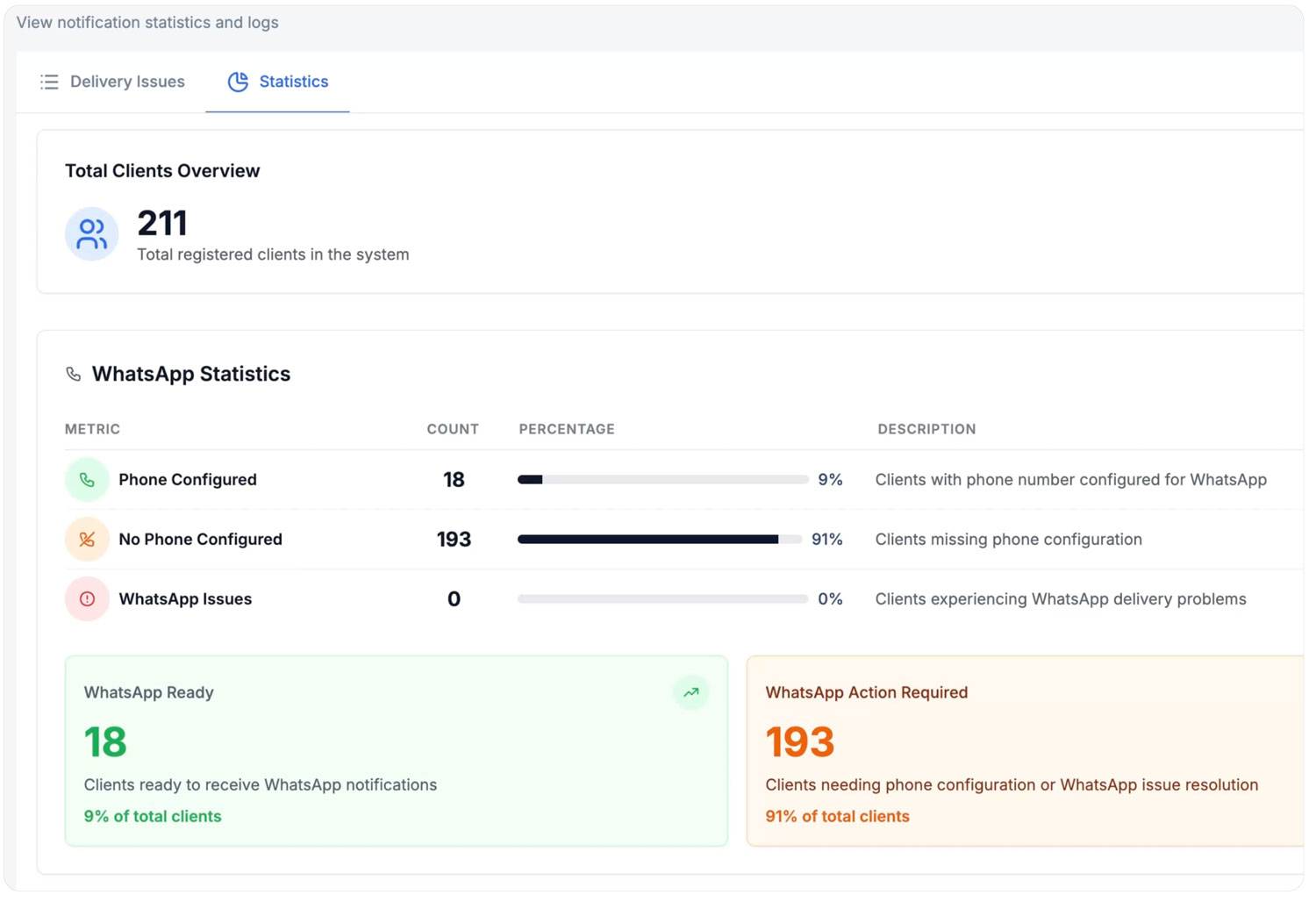
Following the introduction of free WhatsApp confirmations and reminders earlier this year, we have added a new level of visibility into how your notifications are delivered.
The notifications area now allows you to see whether messages have been delivered, bounced or failed. If a message does not reach your client, you can view clear diagnostic information to understand why. This may include issues with the client’s phone number, problems with their WhatsApp configuration or email deliverability concerns.
These tools make it far easier to identify and resolve communication issues. Once an error is corrected, you can resend the notification with a single click. The result is more reliable communication and fewer missed appointments.
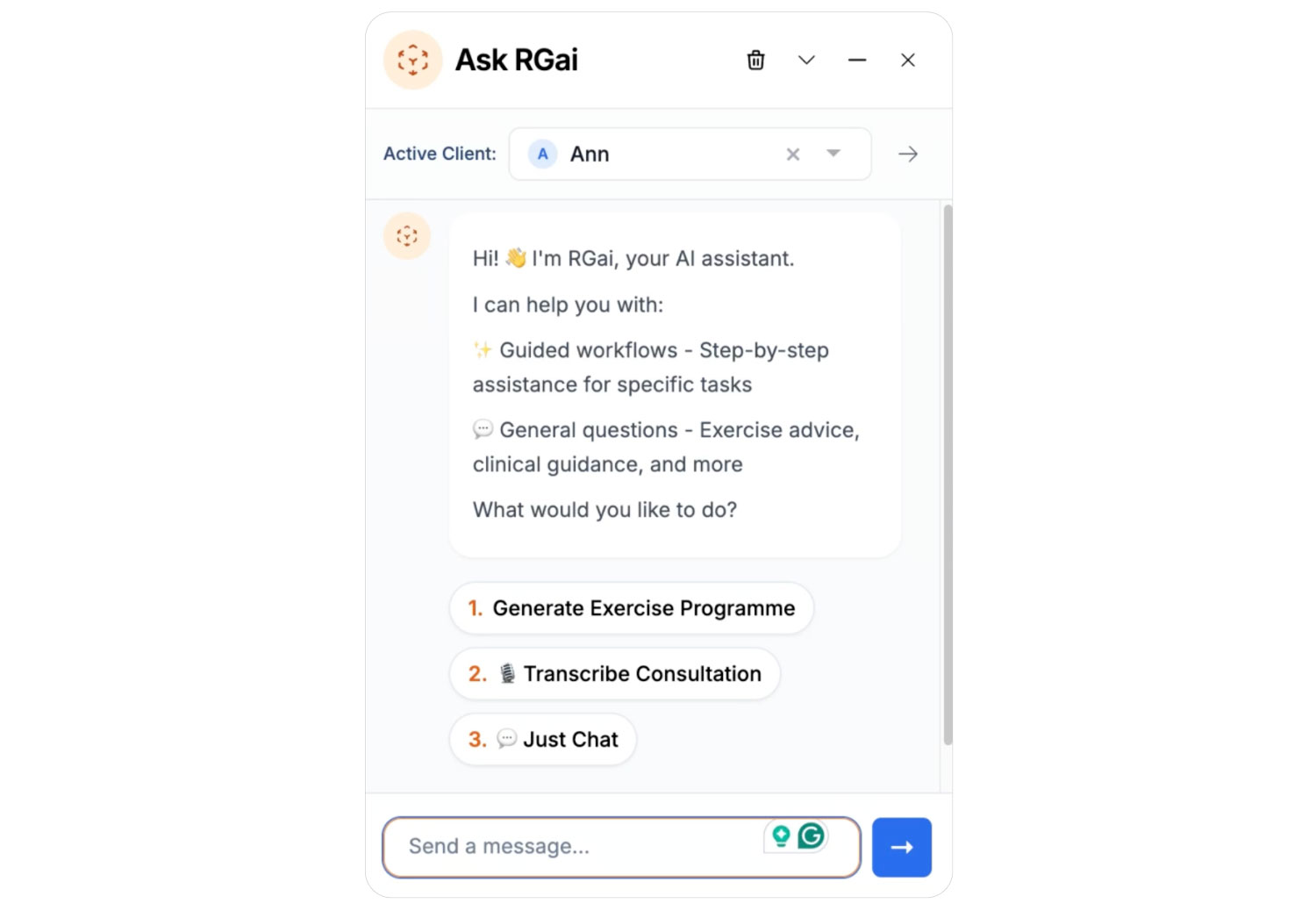
Rehab Guru AI has expanded significantly and now integrates directly into your clinical workflow. You can record a consultation in real time from almost any part of the platform, upload the audio and instantly generate a full transcription.
This transcription can then be used to build exercise programmes or, with one click, converted into a structured treatment note using your preferred template such as SOAP. The AI automatically extracts and organises subjective and objective findings, your assessment and your plan. You retain full control to edit and refine the content before saving it as a draft.
The recording tool can be minimised and moved around your screen so that you can continue working uninterrupted while capturing your consultation. You can then use the transcription as context in an AI chat to ask questions, refine language or explore clinical reasoning. This creates a fast and efficient method for producing thorough clinical documentation.
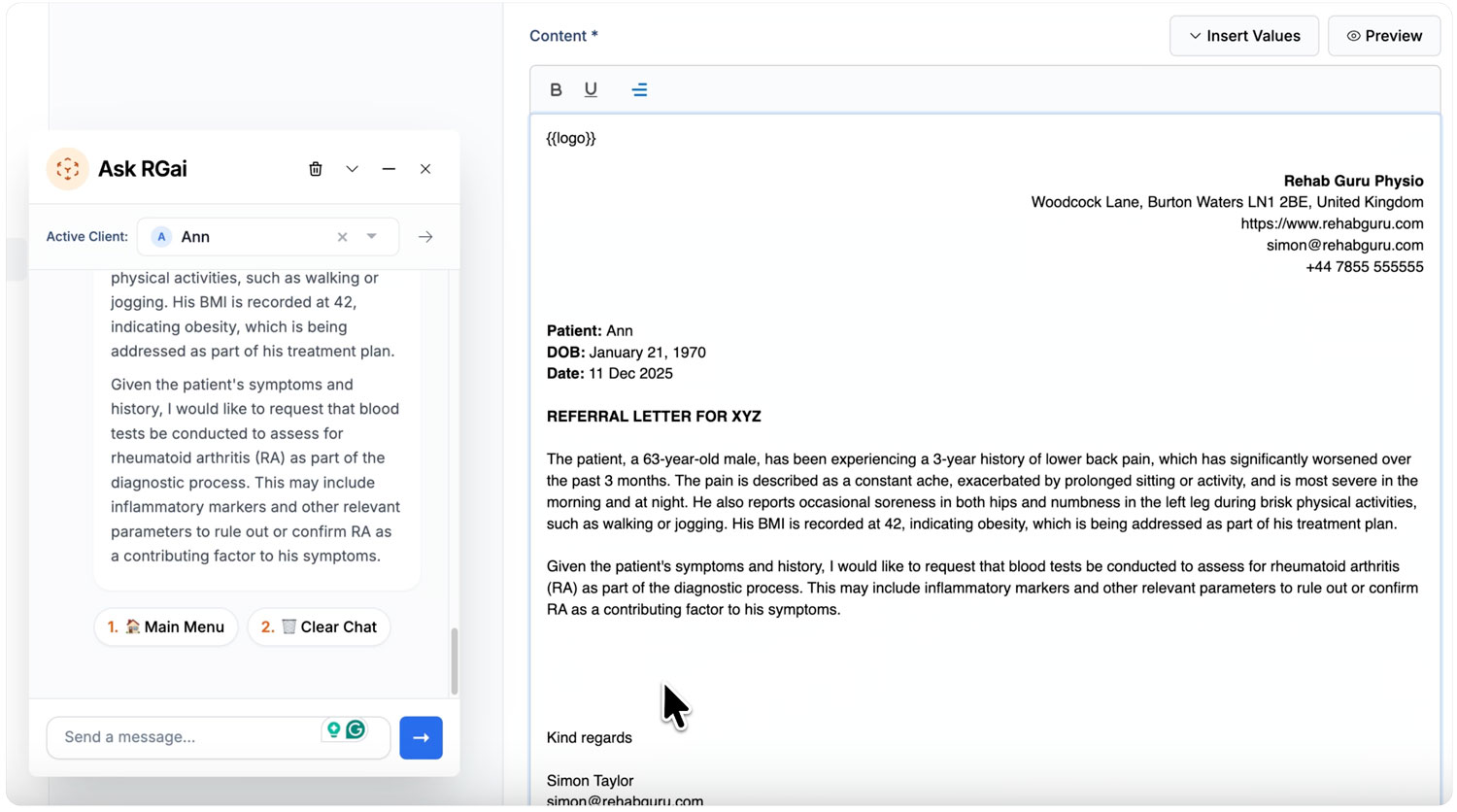
Writing letters is a common part of clinical practice, whether you are contacting GPs, consultants, insurers or fellow clinicians. The new correspondence feature brings this process directly into Rehab Guru and allows you to create structured, reusable letter templates.
Rehab Guru AI can draft correspondence based on your instruction. For example, you may request a letter addressed to a GP asking for blood tests to investigate suspected rheumatoid arthritis. You can refine the wording as needed and insert it into your chosen template.
All correspondence can be previewed, downloaded as a PDF and saved within your correspondence area. Version history is available, and letters can be duplicated when required. This reduces the time spent drafting documents and ensures a consistent professional standard.
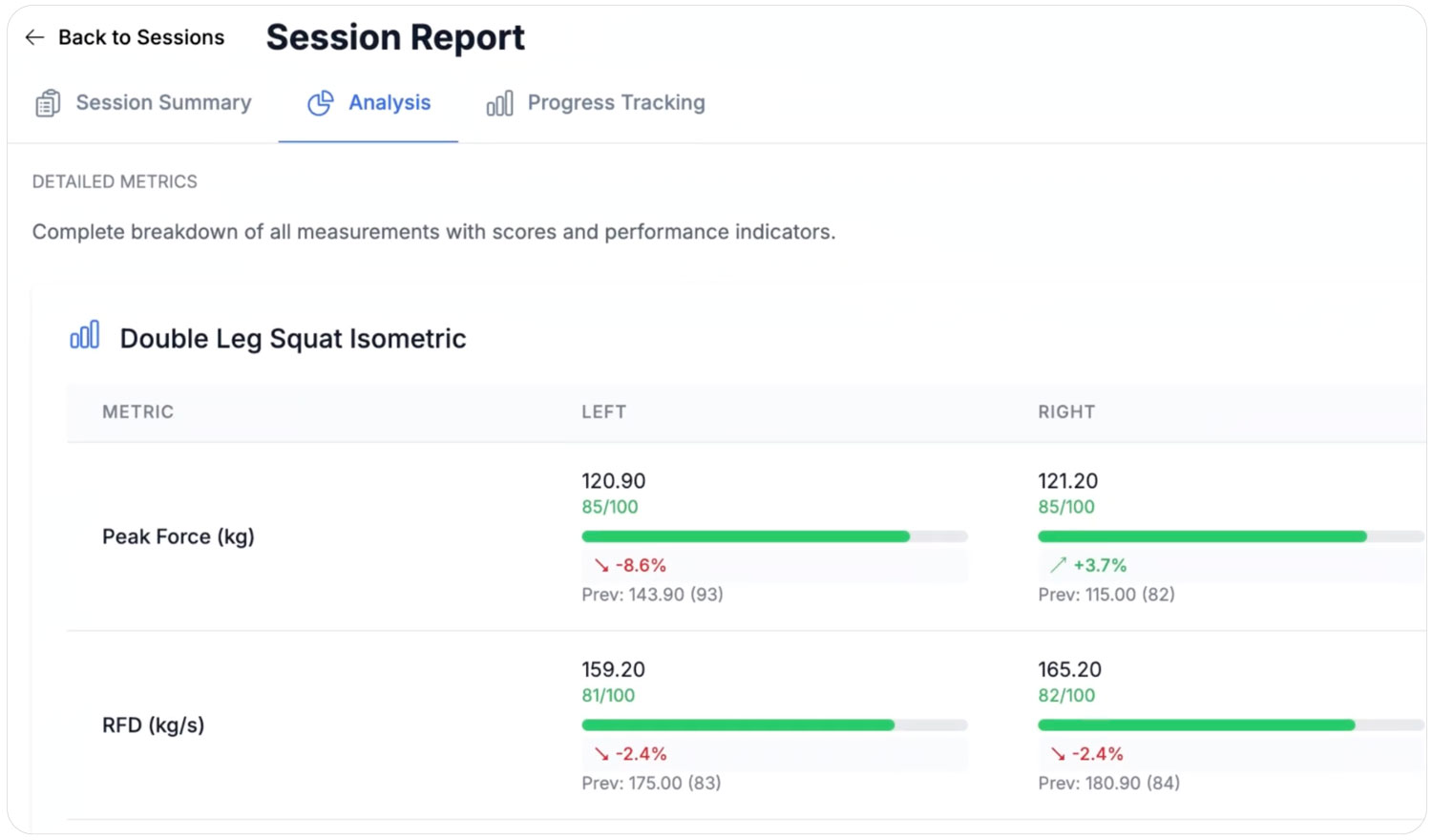
Clinics using objective performance testing can now benefit from a full integration with Strength by Numbers, developed by the AxIT team and distributed in the UK by PhysEquip. Once connected, you can link Strength by Numbers patients to your Rehab Guru clients and view all associated tests directly within the platform.
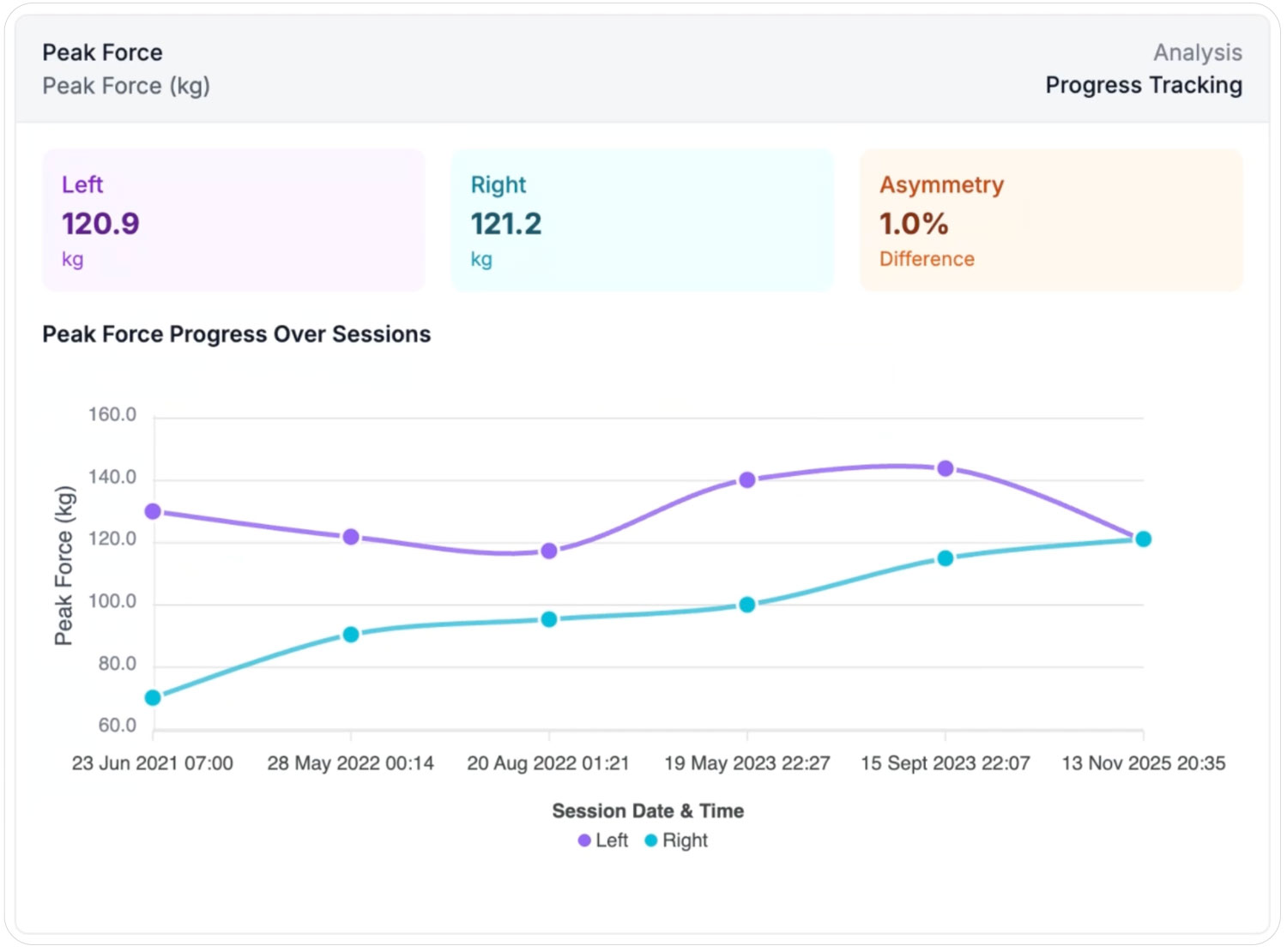
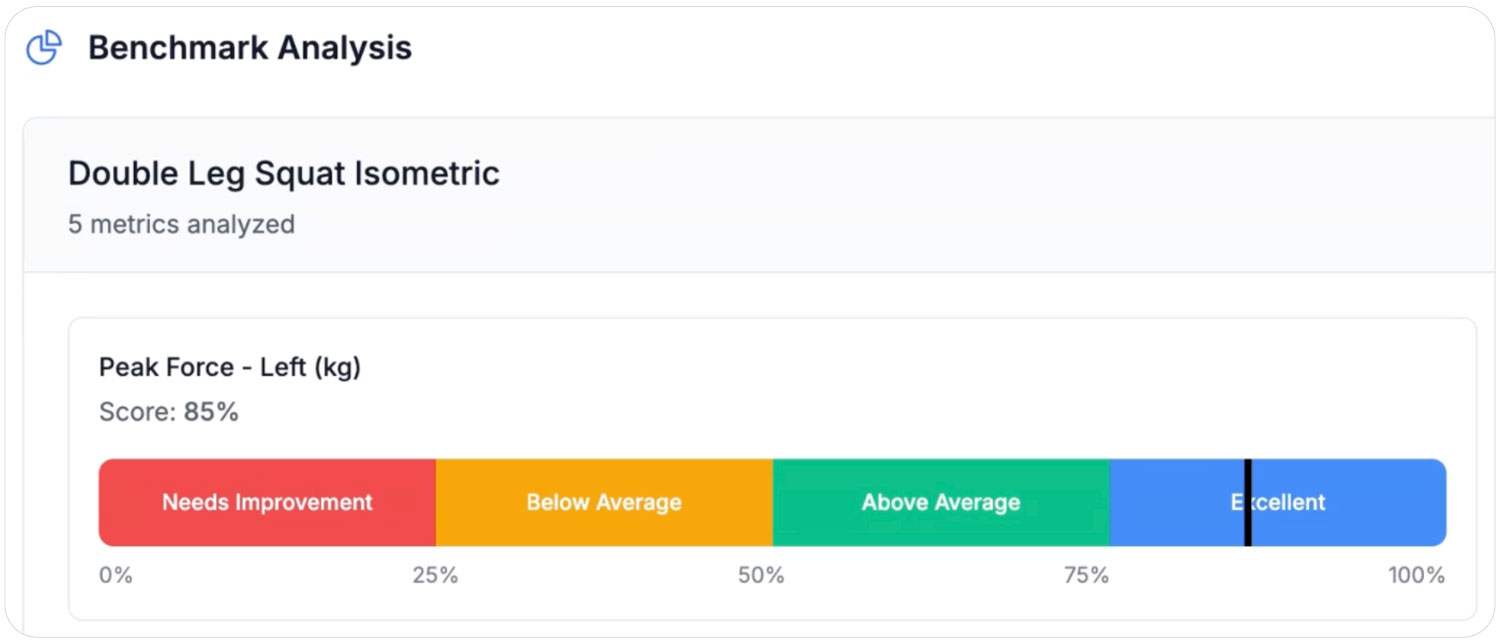
You will see detailed measurements presented as tables and visualised through clear, attractive charts. These allow you to track progress over time and quickly identify performance trends such as asymmetry.
Rehab Guru AI enhances this further by providing automated performance summaries. You can generate an analysis for an individual testing session, complete with findings, asymmetry insights, clinical considerations and recommendations. You can also ask AI to create an exercise programme informed by the objective data you have collected. If you prefer a shorter programme, you may limit the number of exercises and the AI will prioritise the most relevant options.
This integration brings objective data, analysis and programme creation together in one seamless workflow.

All new features are available within Rehab Guru. To use the AI-powered tools, you will need an appropriate Rehab Guru AI add-on. Options include RG AI Plus, which focuses on treatment note transcription and works alongside the Treatment Notes add-on. Other packages provide wider support for programme generation and clinical guidance, allowing you to select the level that suits your practice.
If you need help choosing the right option, our team is always happy to support you.
Each of these new features has been created to reduce administrative burden, elevate the quality of your clinical documentation and enhance your use of objective data. Over the coming weeks we will publish deeper guides and walkthroughs on using ad hoc appointment rules, notification diagnostics, AI transcription, correspondence templates and Strength by Numbers analysis.
All features are available for you to explore today. If you have any questions or suggestions, we welcome your feedback at support@rehabguru.com.

Simon brings a wealth of experience from his varied career and is passionate about bringing technological solutions that enhance patient care and professional practice in healthcare settings.
A former GB Athlete and a veteran of the Royal Air Force for 19 years, Simon has expert knowledge of physical training and rehabilitation, skills that he honed as an Exercise Rehabilitation Instructor and Training Officer.
Combining a BSc in Sports Rehabilitation, an MSc in Information Capability Management and hands-on experience, he provides a unique perspective on the integration of technology and healthcare.